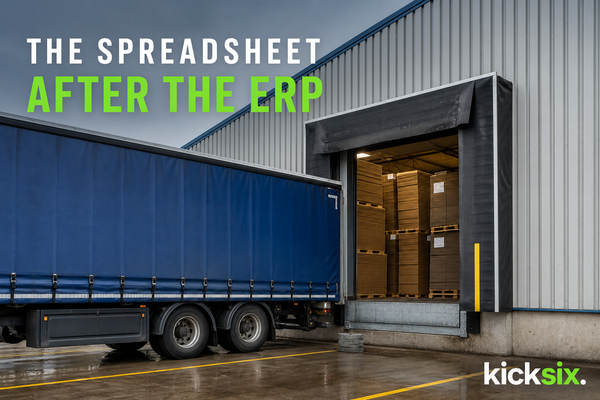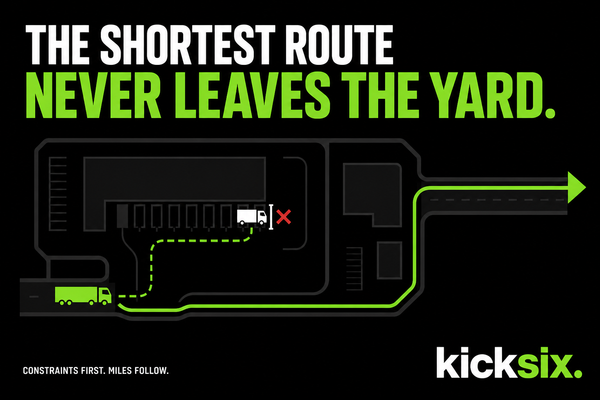
The ERP can tell you what's going where. It still can't load the dock.
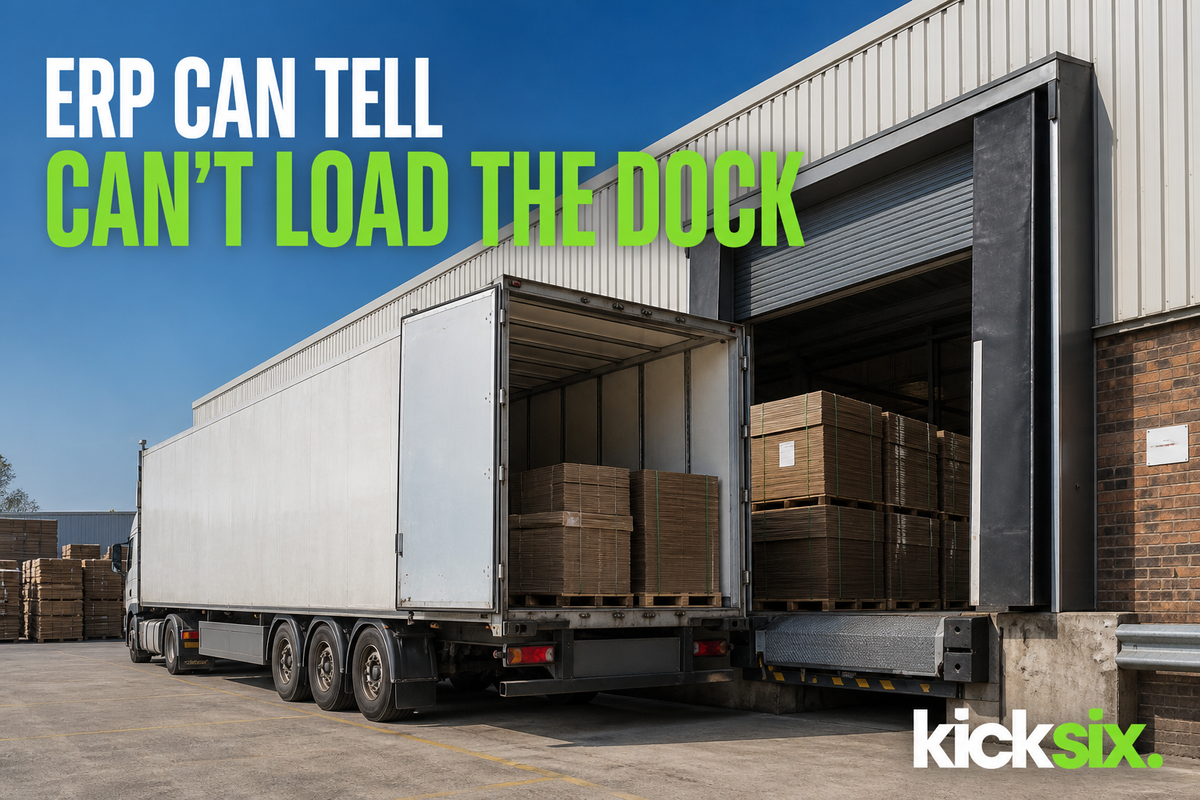
Your ERP already knows what is going where. Sales orders, pick lists, ship dates, customer sites. That layer is solid for most packaging plants I visit.
It still cannot load the dock.
Knowing the order book is not the same as building an axle-legal trailer, clustering multi-drops, or deciding which SKUs share a bay. Those decisions live in the gap between the ERP and the yard.
What integrated planning actually means
Integrated planning does not mean replacing the system that runs finance and stock. It means the transport plan can see production and warehouse reality without a human re-keying half of it into a sheet.
Keep the ERP. Clockwork sits after it. Data moves once via Fabric. From there you plan fill, cluster, and multi-drop against real dimensions and weight, not against a hopeful average pallet.
I hear teams say they are integrated because the ERP can export a CSV. An export is not a plan. If someone still rebuilds the trailer by hand from that file, you have connectivity theatre, not integrated planning.
Where the dock still breaks
I watch the same pattern. Production confirms a ship window. The ERP shows the lines ready. On the dock, the planner is still building the load by eye or from yesterday's template. Then a late line appears, or a customer drop order changes, and the trailer gets reworked while the driver sits.
That is not an ERP failure. The ERP did its job. The missing piece is a load plan that treats the trailer as a 3D, axle-legal space with a real drop sequence.
Warehouse systems know where the stock sits. Transport still often plans as if every pallet is interchangeable. Packaging stock is not interchangeable. Face, crush risk, and stack rules matter. The dock feels that even when the order screen does not.
One flow, not two truths
When order data and load data disagree, the yard invents a third version. That is how you get overbooked docks and trailers that leave under-filled or out of sequence.
Put the planning step after the ERP, not beside it. Let Fabric carry the data once. Then plan the dock with the same facts the warehouse already trusts. That is integrated planning in plant language, not a slide.