The shortest route never leaves the yard
Mileage is a result. Constraints come first. The shortest route on the map is often the one that never leaves the yard.
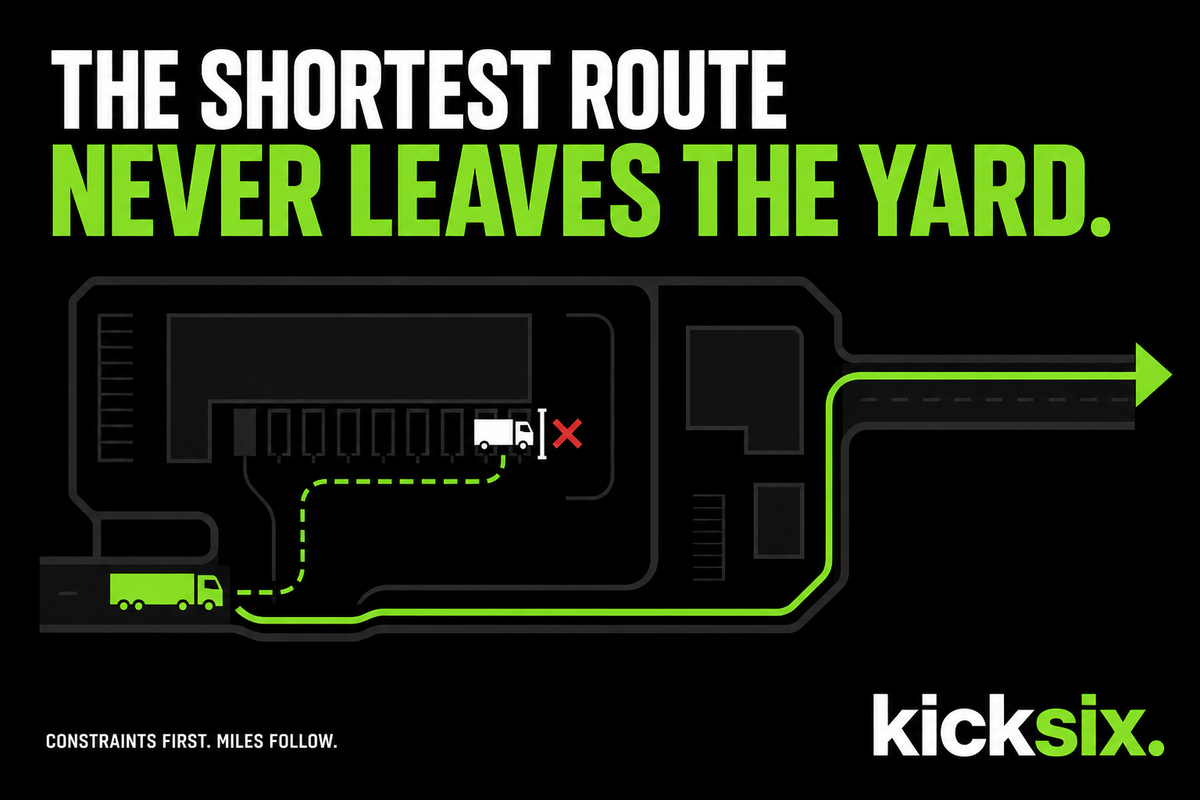
The shortest route on the map is often the one that never leaves the yard.
I see it a lot in packaging plants. Someone gets asked to cut miles. They shuffle the drops, shave a chunk off the day, and it looks great in the meeting.
Then the loading bay gets the plan.
Axle weights don't work. Last-on, first-off is backwards. A board isn't finished, so half the load isn't ready. A customer only takes between 6 and 8. The "efficient" route needs a reverse shunt you can't actually do.
So the plan gets ripped up. And you send more vehicles, not fewer.
The mistake is treating mileage as the thing you optimise first.
Mileage is a result. What you actually have to solve is the constraints: vehicle capacity, loading sequence, production times, customer windows, legal axle limits. Do that properly and miles come down, because the same demand fits on fewer, fuller vehicles.
Chase miles first and you get a pretty map and a messy morning.
That's the problem we built Clockwork around. Not textbook averages. The constraints a packaging plant actually runs on.
If that's the fight you're in, I'd like to compare notes.