Weight on the axle is where the CO₂ hides
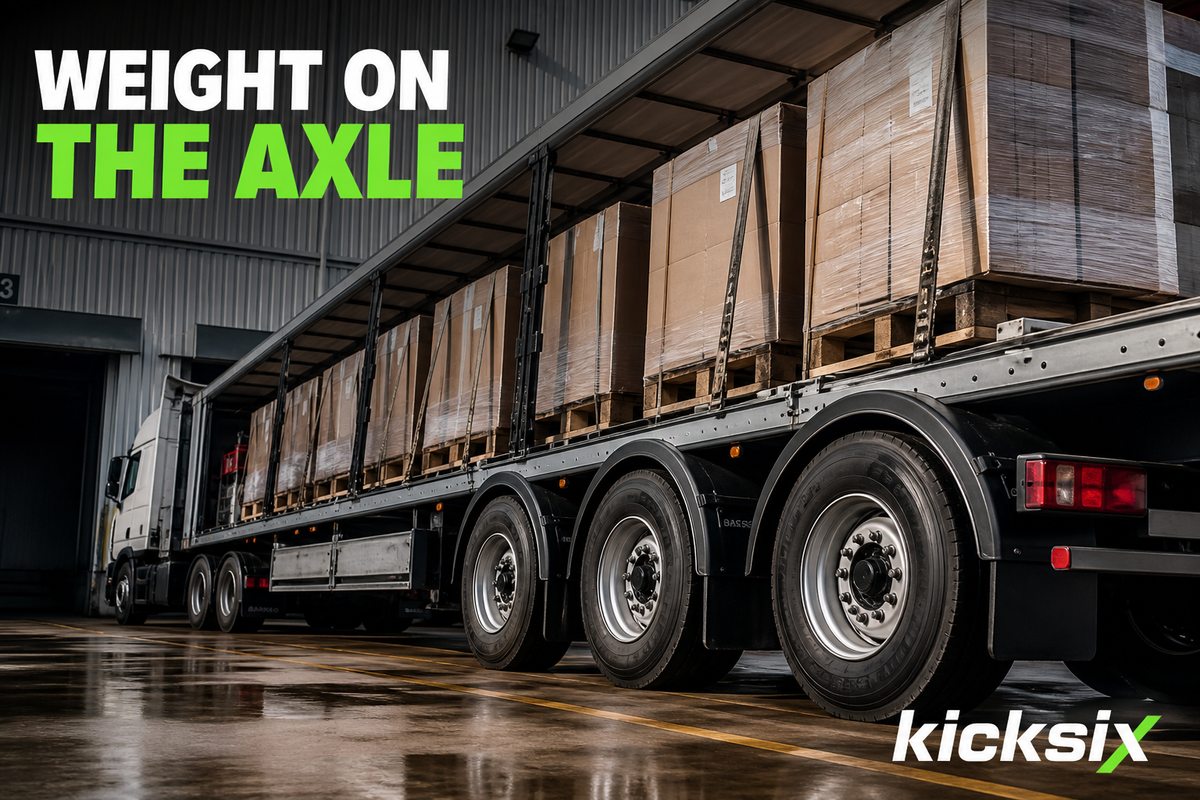
Most packaging plants still talk about miles when they talk about CO₂. Miles matter. They are not the whole story.
Weight on the axle is where a lot of the carbon hides. Push too much onto one axle group and you burn more fuel for the same distance. Leave the trailer light and legal on paper but poorly balanced, and you still pay for air in the wrong places.
Why axle weight beats a simple mile count
A mile with a badly loaded trailer is not the same as a mile with an axle-legal load. Fuel burn follows mass and how that mass sits over the axles. If the front is light and the rear is heavy, or the other way round, the truck works harder than it needs to.
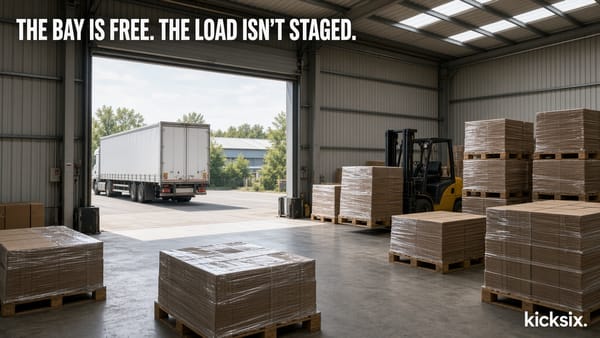
I see plants where planners fill by cube and ignore axle limits until the weighbridge. Then someone shuffles pallets on the dock. That shuffle costs time. It also means the plan you thought you had was never real.
Route tools will happily cut a kilometre here and there. That helps. It does not fix a trailer that hits an axle limit with empty deck still showing. Carbon reports that only count miles miss the loading problem sitting under the data.
What packaging plants actually ship
Corrugated, board, tissue, and converted packs do not behave like uniform blocks. Stack heights change. Densities change by SKU. A trailer that looks full can still be axle-illegal. A trailer that looks half empty can still tip an axle limit if the dense product sits in the wrong bay.
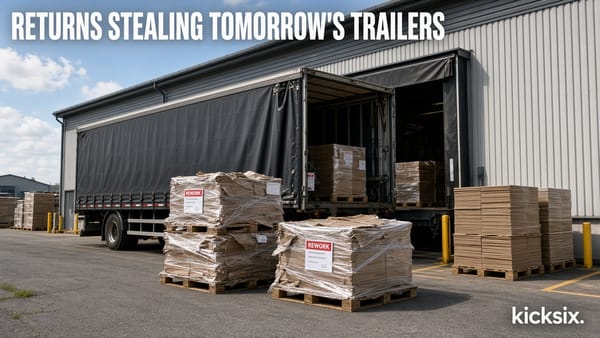
Mixed pallets make it worse. One bay of heavy board next to light converted packs shifts the whole balance. If the multi-drop sequence then forces the heavy product to the wrong end for the first stop, you inherit both a carbon problem and a restack problem.
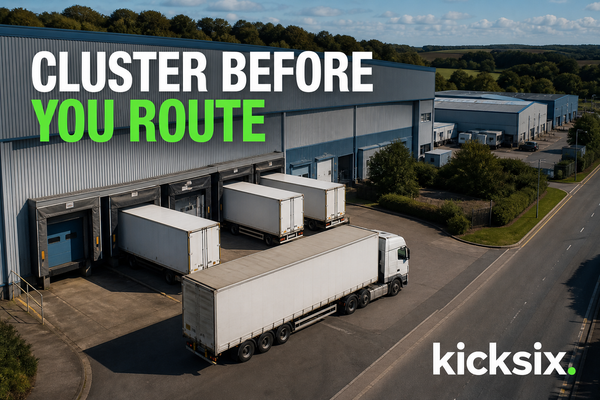
That is why axle-legal 3D planning belongs in the load step, not as a late check. Cluster stops. Fill the deck with the real product sizes. Keep multi-drop sequence honest. Do it before the driver is waiting.
Where Clockwork sits
I am not asking anyone to rip out their ERP. Keep it. Clockwork sits after the ERP. Orders, stock, and ship-from data move once via Fabric. Then the load plan deals with axles, fill, and drop order in one place.
When weight and sequence are planned together, you stop treating CO₂ as a mile spreadsheet and start treating it as a loading problem. That is the work that actually shows up on the road.
If your sustainability pack still only tracks distance, ask how the load was built. The axle story is usually sitting in plain sight on the dock.