Why Seamless Transport Planning is the Heartbeat of Modern Packaging Manufacturing 🚚📦
The hidden cost of “silos”
In many packaging plants, transport planning lives in its own spreadsheet while production runs on an ERP and the warehouse runs a WMS. When these systems don’t talk to each other you get:
- Empty‑truck miles – trucks leave half‑full because the loading plan doesn’t know what pallets are actually ready.
- Production bottlenecks – the line keeps making boxes that can’t be shipped until a truck shows up, inflating work‑in‑process (WIP).
- Warehouse chaos – pickers wait for inbound cartons or scramble to re‑stock when a shipment is delayed.
The result? Higher freight spend, lower on‑time delivery and a fragile supply chain that crumbles under demand spikes.
What integration really means
| Area | Traditional “island” view | Integrated flow (KickSix) |
|---|---|---|
| Demand → Production | Forecasts feed the ERP; transport is added later as an after‑thought. | Real‑time demand, capacity and truck availability are evaluated together, so the line only produces what can be shipped today. |
| Shop floor → Warehouse | Finished goods sit in buffers waiting for a loading slot. | Load‑planning engine talks to MES, instantly allocating pallets to the next optimal truck route. |
| Warehouse → Truck | Manual pick‑list → manual load plan → missed space utilization. | 3‑D load optimisation packs cartons tightly, cuts empty miles and reduces CO₂e. |
| Truck → Customer | Delivery windows are guessed; exceptions cause costly re‑routing. | Dynamic route planning updates drivers with the exact loading sequence, guaranteeing promised delivery slots. |
The ROI of a fully integrated solution
- Up to 20 % lower transport spend – KickSix’s AI‑driven load planner eliminates dead space and bundles shipments before they leave the dock.
- 15–30 % reduction in WIP – Production only runs when a truck is ready, shrinking inventory and freeing floor space.
- 10 % faster order‑to‑ship time – Real‑time hand‑off from MES to transport removes manual paperwork and re‑staging delays.
- Sustainability wins – Fewer empty miles = lower carbon footprint, an easy talking point for customers demanding greener packaging.
How KickSix makes it happen
- Predictive load optimisation – The engine evaluates dozens of truck configurations (pallets, roll‑goods, corrugated sheets) and picks the most space‑efficient layout before the first case is even produced.
- Dynamic scheduling – When a machine breaks or a rush order lands, the system instantly reshuffles both production batches and truck loads, keeping delivery promises intact.
Real‑world example (paper & film packaging)
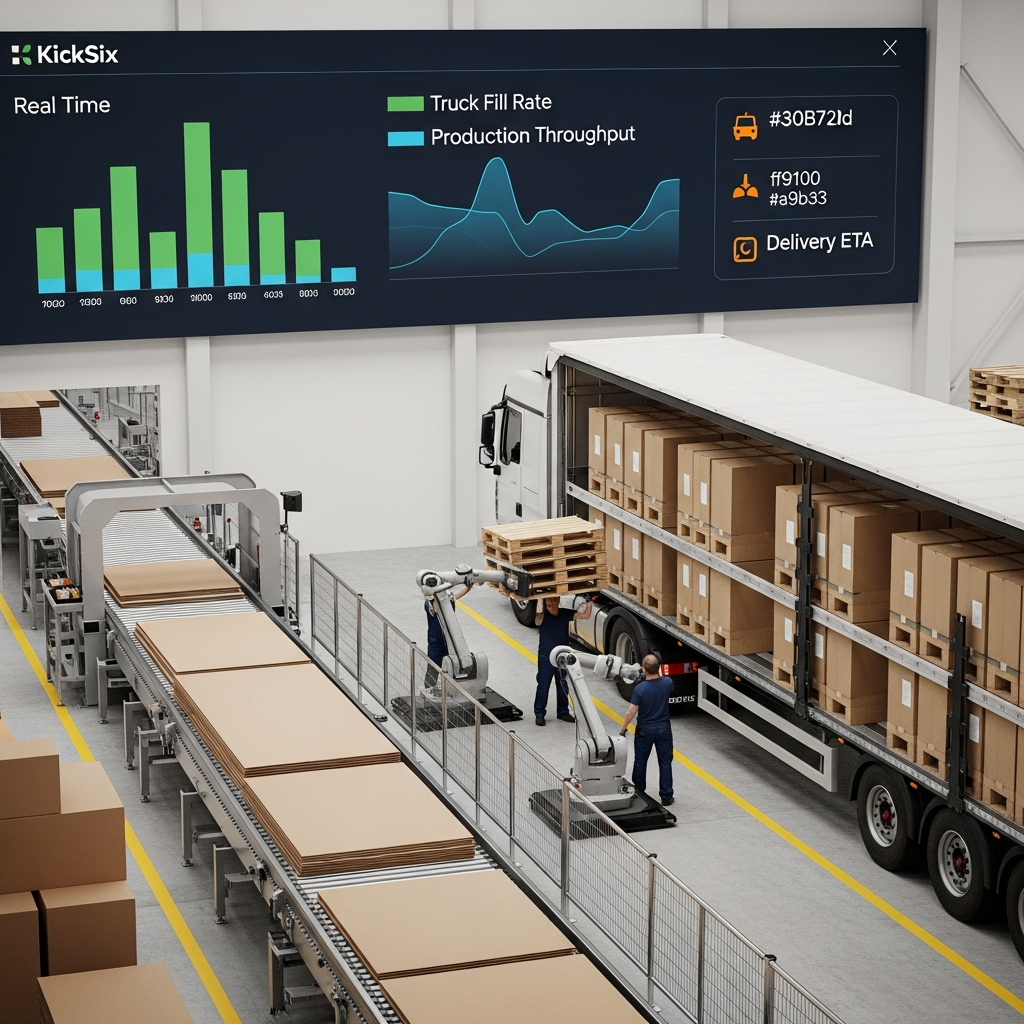
A European corrugated board maker struggled with frequent “truck‑first” disruptions: trucks arrived before the cutting line could finish the required panel sizes, forcing costly re‑loads or missed appointments. After deploying KickSix:
- The transport planner now receives cut‑plan data directly from the MES and schedules trucks only when the exact mix of panels is ready.
- 3‑D load planning reduced average truck fill from 68 % to 83%, slashing freight cost by 15 %.
Bottom line for packaging leaders
The packaging industry is already fighting tighter margins, volatile demand and the pressure of e‑commerce “same‑day” expectations. Treating transport as an afterthought is no longer an option.
Fully integrated transport planning ties production speed, warehouse flow and truck utilisation together in a single, intelligent loop. The payoff is lower costs, higher service levels and a greener footprint—exactly what modern brands and their customers expect.
Ready to turn your siloed spreadsheets into a synchronized, profit‑driving engine? 🚀
Ask KickSix for a demo today and see how integrated transport planning can reshape your packaging business.